The advent of artificial intelligence (AI) is reshaping the global economic landscape in profound and unprecedented ways. While the potential for innovation and efficiency is celebrated, a pervasive concern grows louder: capitalism as we know it may struggle to adapt to the widespread displacement caused by AI. This apprehension stems not merely from a surface-level observation of job losses but from deeper structural frictions and ideological paradoxes inherent within capitalist systems. Understanding why capitalism may falter requires an exploration of its foundational dynamics and the disruptive force AI represents.
The Mechanistic Heart of Capitalism and AI’s Disruption
Capitalism fundamentally revolves around the principles of labor, capital accumulation, and market exchange. The traditional model relies on human labor as a vital input in production, wage-based consumption, and perpetuating demand. Artificial intelligence challenges this mechanistic heart by decoupling production from human effort more drastically than any prior technological revolution. Automation has long been a feature of capitalist economies, yet AI’s ability to replicate cognitive tasks introduces a novel disjunction.
This severance means that machines are not only replacing manual labor but also white-collar, creative, and managerial roles. The implication is seismic. If human labor no longer drives value creation in meaningful ways, the circular flow of wages fueling consumption becomes disrupted, undermining the capitalist engine of supply and demand. This incongruity between labor displacement and consumption capacity may lead to systemic stagnation, far beyond cyclical recessions.
The Paradox of Productivity and Consumer Demand
Capitalism prizes productivity enhancements as a means to generate wealth and improve living standards. Yet, AI-driven productivity presents a paradox. Increasing output and efficiency would traditionally lower costs, raise incomes, and stimulate demand. With AI replacing vast swaths of the workforce, fewer individuals earn wages necessary to purchase the very goods and services they produce. This latent contradiction challenges the foundational assumption that productivity gains inherently boost economic growth.
Moreover, the hyper-acceleration of productivity through AI could lead to market gluts — a surplus of goods without sufficient consumers. Capitalist markets, driven by profit and competition, may find themselves trapped in cycles of overproduction and underconsumption. This paradox not only strains economic equilibria but also fuels social discontent and inequality.
The Concentration of Wealth and Power in the Age of AI
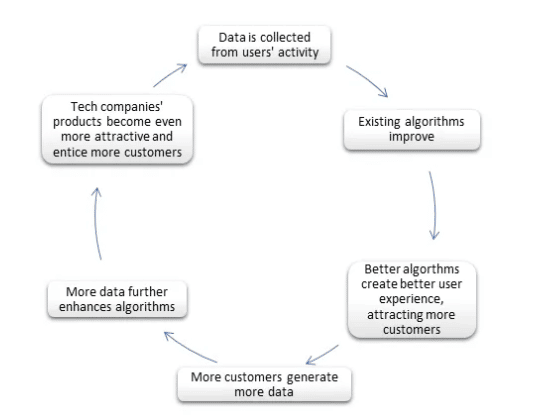
AI technologies demand substantial capital investment, favoring entities with deep financial reservoirs and cutting-edge expertise. As a consequence, wealth and technological capabilities become increasingly concentrated within a small cohort of corporations and elites. This intensification of capital centralization exacerbates existing inequalities, squeezing out smaller enterprises and workers from meaningful participation in economic life.
With wealth concentrated, capital owners gain disproportionate control over production, distribution, and consumption patterns. This oligopolistic dominance disrupts competitive markets—a core premise of capitalism—and leads to rent-seeking behaviors that stifle innovation and social mobility. The entrenchment of monopoly-like power poses existential questions about capitalism’s resilience if AI amplifies these tendencies unchecked.
The Erosion of Labor’s Bargaining Power and Social Contract
The traditional social contract in capitalist societies is underpinned by labor’s ability to negotiate wages and conditions in return for productivity. AI’s displacement erodes this bargaining power, as machines replace many roles previously held by workers. The resulting unemployment or underemployment diminishes collective agency, weakening labor movements and diluting political influence.
This erosion undermines institutional frameworks designed to redistribute wealth and maintain social cohesion, such as progressive taxation, welfare programs, and public goods provision. Without an effective labor force driving consumption and social stability, capitalism faces intensified pressures to reform or risk destabilizing inequities and unrest.
The Limits of Market Solutions and the Rise of New Economic Paradigms
Proponents of capitalism often maintain that market mechanisms can self-correct in response to technological disruptions. However, AI displacement exposes the limitations of these market remedies. Traditional solutions such as retraining, job creation in new sectors, and entrepreneurial opportunities may prove inadequate at the scale and speed AI demands.
Furthermore, market-driven innovation tends to prioritize profit over social welfare, leading to exclusion and fragmentation. As AI redefines labor and production, there emerges a growing discourse about alternative frameworks—universal basic income, state-led investment in human capital, and even post-capitalist structures focused on abundance and equitable resource allocation.
The Psychological and Cultural Dimensions of AI-Driven Change
Beyond economic structures, the widespread displacement caused by AI unsettles psychological and cultural norms tied to capitalism. Work has long been a source of identity, purpose, and social status. AI’s disruption challenges these narratives by rendering traditional work obsolete for many. This fracture heightens anxiety, challenges consumer-centric lifestyles, and triggers philosophical questions about human value and societal organization.
The cultural implications ripple into politics and governance, affecting public trust and legitimacy of capitalist institutions. Without addressing these deeper human dimensions, mere economic adjustments may fail to reconcile capitalism’s future with the reality of pervasive AI impact.
Conclusion: The Imperative for Adaptive Capitalism
Artificial intelligence’s displacement of labor poses a formidable challenge to the capitalist order. The fundamental tensions between AI-driven productivity, labor displacement, wealth concentration, and consumption patterns expose capitalism’s structural vulnerabilities. Addressing these challenges requires more than incremental reforms; it demands reimagining economic paradigms that integrate technological advancements with social equity, human dignity, and sustainable prosperity.
Capitalism’s survival hinges on its capacity to adapt to AI’s transformative effects, including redefining labor’s role, ensuring broader wealth distribution, and fostering markets conducive to inclusive growth. Failure to engage with these deeper issues risks not only economic stagnation but profound social disintegration. The trajectory of the coming decades will reveal whether capitalism can evolve or whether AI’s disruptive potential will catalyze new economic futures altogether.


