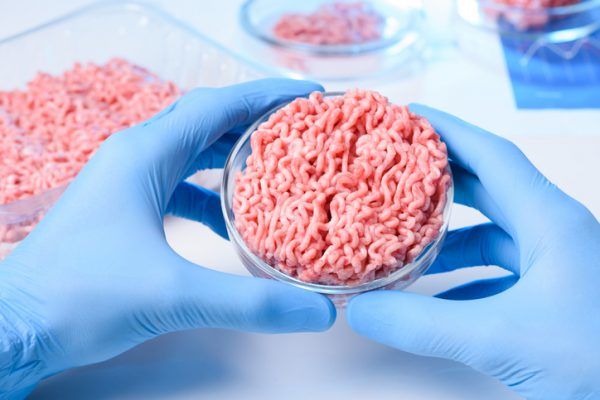
Have you ever wondered why the sizzling patty of fake meat often comes with a heftier price tag than its traditional, bovine counterpart? It seems counterintuitive—after all, fake meat isn’t drawn from livestock, spared the complexities of animal husbandry and slaughter. Yet, in the marketplace, these plant-based or lab-crafted alternatives frequently demand more of your wallet. Is this pricing anomaly a mere side effect of novelty, or does it unravel deeper threads woven by the mechanisms of capitalism itself?
The Intricacies of Production Costs: Why Science Isn’t Cheap
At the heart of the price disparity lies the labyrinthine process involved in creating fake meat. Unlike the relatively straightforward chain of raising, feeding, and butchering animals, producing plant-based or cultured meat relies heavily on cutting-edge biotechnology and sophisticated manufacturing techniques. Cultivating muscle cells in a lab, for instance, demands sterile environments, specialized growth media, and skilled labor—elements that collectively swell the cost of production.
Plant-based alternatives, while ostensibly simpler, often incorporate a blend of extracted proteins, flavors, binders, and colorants meticulously engineered to mimic the sensory experience of real meat. This concoction is the product of extensive research and development, testing iterations, and formulation tweaks, all of which incur substantial sunk costs. Companies recoup these investments through pricing strategies that reflect the novelty and complexity embedded in the product rather than mere raw material expenses.
Economies of Scale and Market Penetration
Another cog in the pricing machine is the scale at which fake meat is produced compared to conventional meat. Real meat benefits from centuries-old, globally entrenched production infrastructures. Industrial-scale farms, slaughterhouses, and distribution networks have optimized supply chains, driving down marginal costs as output rises. This phenomenon, known as economies of scale, allows the meat industry to command relatively lower prices despite the ethical and environmental externalities.
Conversely, fake meat producers are still in the nascent stages of market penetration. Many operate at smaller scales, lacking the bulk production efficiencies that reduce unit costs. Limited batch sizes translate into higher per-unit expenses, which inevitably manifest in the product’s retail price. Until these companies achieve mass-market reach and replicate some of the economies enjoyed by conventional meat, the price premium will likely persist.
Capital Investment and Venture Capital Influence
The labyrinth of capitalism is inextricably linked to investment dynamics. Fake meat ventures often attract venture capitalists and impact investors eager to align profits with sustainability and ethical consumption. These investors anticipate significant returns to justify their funding, which pressures startups and established companies alike to price products in a manner that accelerates revenue growth.
Furthermore, the capital-intensive nature of developing innovative food technology infrastructure—bioreactors, fermentation tanks, molecular labs—is non-trivial. Amortizing these hefty capital expenditures over relatively small production volumes requires pricing strategies reflecting this financial burden. Real meat industries, often composed of mature corporations or consolidated agricultural entities, can draw on more stable cash flows and longer production cycles, easing the pressure to mark up prices as aggressively.
Consumer Perceptions and Willingness to Pay
Capitalism is ultimately a dialogue between supply and demand, nuanced by consumer psychology. Early adopters of fake meat tend to be urban, affluent, and environmentally conscious. This demographic segment often values innovation, health, and sustainability, attributes they may be willing to pay premiums for. Producers, aware of this willingness to pay, strategically position their products as premium goods, weaving narratives of ethical consumption and groundbreaking technology.
On the flip side, conventional meat is sometimes perceived as mundane or commoditized, limiting producers’ ability to elevate prices without alienating broader consumer bases. Fake meat, riding waves of novelty and ethical marketing, harnesses consumer fascination to sustain price points higher than what the raw input costs alone might justify.
Regulatory Landscapes and Supply Chain Complexities
The regulatory environment surrounding fake meat also subtly inflates costs. Since these products inhabit uncharted territory, they often require rigorous approval processes to verify safety, labeling, and nutritional claims. Regulatory agencies impose stringent testing protocols, compliance documentation, and sometimes bespoke standards, which embed additional overhead into production timelines and costs.
Moreover, sourcing specialized ingredients—like novel plant proteins, flavor compounds, or cultured cell lines—entails navigating intricate supply chains that are not yet streamlined. This logistical complexity contributes to higher procurement costs and vulnerabilities to supply disruptions, factors reflected in the retail price.
The Paradox of Capitalism: Innovation Versus Affordability
Capitalism thrives on innovation, but innovation is often an expensive pursuit in its infancy. The premium pricing of fake meat reflects this paradox—consumers’ pockets bear the brunt of cutting-edge advancements aimed at reimagining one of humanity’s oldest food staples. It is a dynamic interplay where market forces, investment imperatives, production realities, and consumer expectations converge to shape prices.
Over time, as innovation matures and production scales widen, prices may converge or even undercut conventional meat, especially considering externalities like environmental degradation. However, until that equilibrium is reached, the high cost of fake meat serves as a palpable reminder of the capitalistic balancing act between progress and profit.
Envisioning the Future: Will Prices Equalize?
The question remains: Can fake meat break free from its premium price niche? The trajectory suggests so, but only through relentless iteration, expanded manufacturing infrastructure, regulatory clarity, and broadened consumer adoption. Reduced costs of input materials, improved biofabrication techniques, and mainstream acceptance could precipitate a paradigm shift where fake meat not only competes with but potentially outprices conventional options on purely economic grounds.
Until then, the seemingly paradoxical pricing structure invites consumers to ponder the multifaceted influences capitalism casts upon food innovation. Is the higher price a barrier, or a badge of pioneering responsibility toward a sustainable food future?

