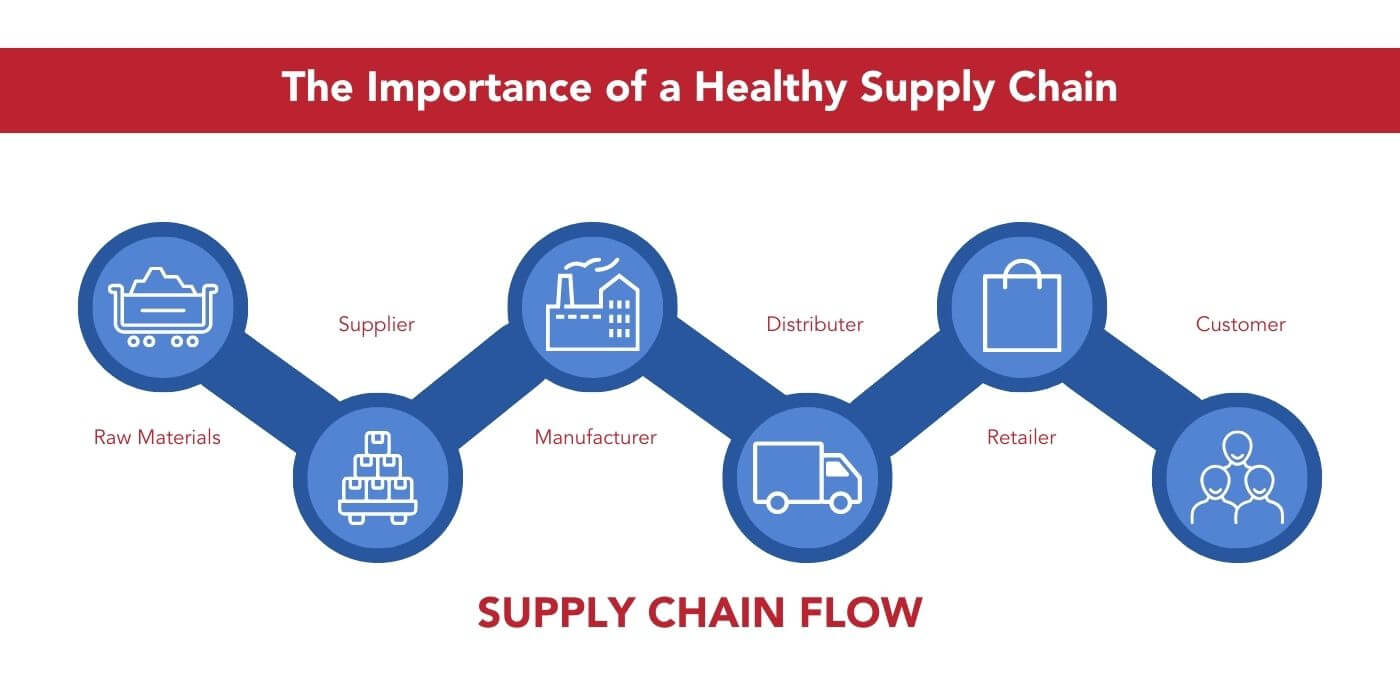
Can capitalism truly thrive when the sinews of global commerce—the supply chains—are frayed and fragmented? This question, once theoretical, has fast transformed into an urgent query as widespread disruptions ripple across the world economy. The intricate dance of production, distribution, and consumption that capitalism relies on is increasingly imperiled by vulnerabilities embedded in modern supply chains. What happens when the very circulatory system of capitalism stutters and stalls under pressure? Exploring the multifaceted ways global supply chain disruptions challenge foundational capitalist assumptions reveals both surprising fragilities and profound implications for economic orthodoxy.
The Fragility Beneath the Facade of Globalization
Globalization promised an interconnected prosperity where goods, services, and capital would flow effortlessly across borders, creating a finely tuned network optimized for efficiency and growth. Yet, this intricate web has proven to be exceptionally fragile. At its core, modern supply chains operate on just-in-time principles, minimizing inventory to reduce costs. While this lean approach maximizes capital utilization in bullish markets, it leaves almost no buffer for shocks. A strike, natural disaster, or geopolitical conflict in a single node can cascade, halting production worldwide.
This fragility differs sharply from the idealized capitalist market’s notion of resilience through competition and market adaptation. Instead, it exposes a systemic vulnerability: a near-monopolization of production inputs and centralized chokepoints that capitalism’s decentralized competition inadvertently cultivates. Such concentration contradicts the assumption that dispersed market actors can absorb and mitigate localized disruptions, showing how global supply chains have bred systemic risk rather than diversified it.
Supply Chains and the Myth of Infinite Growth
Capitalism thrives under the premise of infinite growth—continual expansion of production, consumption, and capital accumulation. This ideology assumes that resources and logistical capabilities are perpetually scalable. However, global supply chain disruptions puncture this myth. When raw materials become scarce or logistics bottleneck, the engines of growth sputter.
For example, semiconductor shortages have demonstrably stalled entire industries, from automotive to electronics. These deficits translate into production delays, price inflation, and strained corporate earnings, all of which confound the expected patterns of capitalist acceleration. The inability to maintain seamless inputs throttles output, challenging the very assumption that production can expand endlessly through market mechanisms.
Capitalism’s Dependence on Predictability and Coordination
Markets function optimally when information flows transparently and participants can anticipate supply and demand with reasonable accuracy. The orchestrated choreography of capitalism depends on this predictability. Supply chain disruptions introduce a chaotic element, injecting uncertainty into procurement, manufacturing, and distribution processes.
When firms face unpredictable delays or inflated costs, their investment decisions grow cautious or reactive, undermining the rational expectations embedded in capitalist models. The lack of coordination amplifies inefficiencies, as firms scramble to reconfigure sourcing strategies or build redundant inventory buffers. This shift toward risk-aversion challenges capitalism’s underlying faith in spontaneous order arising from decentralized decision-making, revealing the limitations of free-market equilibria under stress.
The Inflationary Spiral and Wage-Price Dynamics
One of the most unsettling consequences of supply chain disruptions is their inflationary pressure on prices. Scarcity of inputs and delayed deliveries inevitably elevate production costs, which cascade into consumer prices. Capitalism assumes that wages and prices adjust fluidly to reflect market conditions. Yet, disruptions have accentuated wage-price dynamics, leading to stagflationary tendencies, where prices rise without commensurate increases in real wages.
This divergence fuels social and economic tensions, questioning the capitalist promise of shared prosperity through market self-regulation. Workers demand higher wages to keep pace with inflation, while companies balk at rising labor costs amid uncertain revenues. The friction disrupts profit margins and investment appetites, aggravating economic volatility in ways classical capitalist frameworks struggle to explain or resolve.
The Reconfiguration of Global Economic Power
Supply chain vulnerabilities have reignited debates about economic sovereignty and strategic autonomy. Capitalism’s globalist tendencies encouraged outsourcing and offshoring in the relentless quest for cost advantages. However, disruptions have spotlighted the dangers of over-reliance on particular countries or regions for critical components.
As a result, governments and corporations are reconsidering their supply chain architectures. Policies encouraging nearshoring, diversification, and stockpiling signify a shift away from pure market logic toward strategic intervention. This recalibration unsettles global trade dynamics and challenges capitalism’s assumption that unregulated international competition will naturally optimize resource allocation. Instead, new layers of protectionism and state involvement hint at the emergence of a hybrid system where market forces are tempered by geopolitical considerations.
Environmental Constraints Amplify Supply Chain Risks
Environmental degradation and climate change have become potent multipliers of supply chain disruption. Extreme weather events, resource depletion, and regulatory pressures inject new uncertainties into production systems. Capitalism’s growth imperative often downplays or externalizes environmental costs, but supply chain failures increasingly expose these risks as immediate and material.
Floods, droughts, and shifting climate zones alter agricultural yields and raw material availability, propagating instability across supply networks. Moreover, environmental regulations designed to curb emissions or pollution impact production methods and timing. Firms must now navigate a labyrinth of environmental compliance alongside logistical challenges, complicating the capitalist calculus of cost minimization and profit maximization. This suggests a growing tension between capitalist growth models and planetary boundaries.
The Human Element: Labor, Logistics, and Social Unrest
Behind the mechanistic flow of goods lies a complex tapestry of human labor and social infrastructure. Supply chain disruptions have underscored the precariousness of the global workforce engaged in manufacturing, transportation, and warehousing.
Labor shortages, strikes, and pandemic-related health concerns diminish operational capacity, making supply chains as much a sociopolitical ecosystem as an economic one. Social unrest triggered by rising living costs or inequitable working conditions feeds back into supply chain stability. The capitalist presumption that labor markets can be infinitely flexible and self-correcting is challenged, revealing that labor’s human and social dimensions profoundly influence economic performance.
The Technological Paradox: Innovation Amidst Vulnerability
Technological advancements have been hailed as solutions to capitalist inefficiencies and vulnerabilities. Automation, AI-driven logistics, and blockchain tracking promise enhanced supply chain resilience and transparency. Yet, reliance on complex technology introduces new failure modes—cybersecurity risks, technological disruptions, and steep capital investments—that themselves can destabilize supply chains.
Moreover, the asymmetry in technological access between developed and developing regions perpetuates global inequalities, undermining the capitalist ideal of equal opportunity. Hence, while innovation offers tools to mitigate disruptions, it simultaneously complicates the capitalist narrative of smooth, meritocratic markets by introducing systemic and geopolitical dimensions to technological deployment.
Conclusion: Toward a Rethinking of Capitalist Models
The recent turbulence in global supply chains has illuminated profound fissures in capitalism’s foundational premises. The delicate interdependence that propels modern capital accumulation also seeds systemic risks and exposes inflexibilities in relentless growth, predictability, market coordination, and labor dynamics. Supply chain disruptions compel a reconsideration of economic orthodoxy and invite exploration of hybrid models that balance market efficiency with strategic resilience and social equity.
As capitalism confronts these challenges, it may evolve from an orthodoxy of unfettered markets toward a more nuanced framework that accommodates complexity, uncertainty, and human and environmental factors at its core. Whether this transformation will preserve capitalism’s core dynamism or herald a radical restructuring remains an open and thrilling question for economists, policymakers, and society at large.

