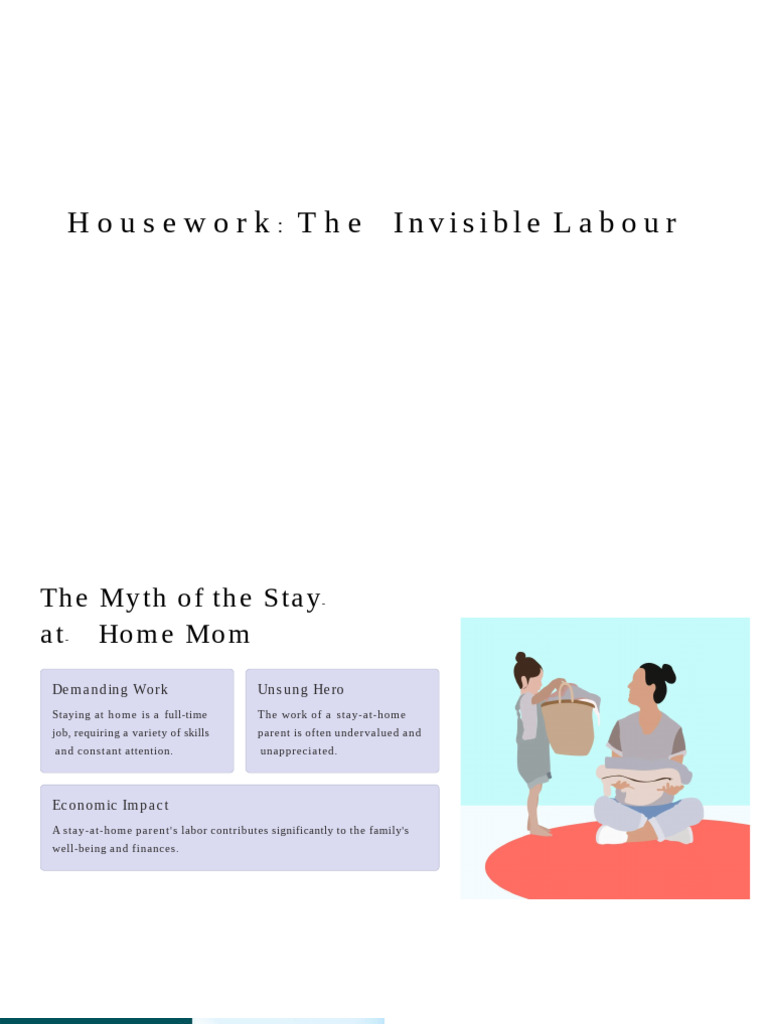
Ever wondered why the relentless hum of a washing machine never makes it onto a stock ticker? The answer lies in a paradox that has long eluded both economists and activists: housework, the quiet engine of everyday life, remains systematically invisible to capitalism. This invisibility is not a mere oversight; it is a structural feature of a system that prizes profit over presence, exchange over care, and quantifiable output over uncountable labor.
The Market’s Myopic Lens: Commodities, Not Care
Capitalism, at its core, operates on the exchange value of commodities—goods and services that can be bought, sold, and priced. Housework, however, resists quantification. When a mother folds laundry or a partner prepares dinner, the act produces no receipt, no invoice, no line item on a balance sheet. This lack of a price tag consigns domestic labor to a realm the market simply does not recognize. The result is a hidden economy, one that sustains the productive workforce while staying perpetually off the radar of profit‑driven metrics.
Gendered Division of Labor: The Quiet Reinforcement of Patriarchy
Historically, the division of labor has been gendered, assigning women the bulk of household tasks. This gendered allocation is not an accidental by‑product; it is a deliberate mechanism that reinforces patriarchal hierarchies while feeding the capitalist engine. By relegating essential upkeep to the private sphere, capitalism offloads a massive amount of productive work onto those whose labor is already undervalued. The invisible nature of housework thus becomes a tool of domination, preserving gendered inequities under the guise of “natural” roles.
The Myth of the “Free” Household: Externalities and Hidden Costs
In classical economic theory, externalities are costs or benefits that spill over beyond the market transaction. Domestic labor is the ultimate negative externality for capitalism: its benefits—health, stability, emotional well‑being—are absorbed by the labor force without any compensation. Because these benefits are internalized within families, they never surface as taxable income or as a line on corporate profit statements. The myth of a “free” household, therefore, is a deliberate illusion that masks the true value extracted from unpaid labor.
Time as a Commodity: The Opportunity Cost of Unpaid Work
When capitalists speak of “time is money,” they refer exclusively to time that can be monetized. The hours spent scrubbing dishes or tending to children are excluded from this equation. Yet these very hours represent an opportunity cost: time that could otherwise be channeled into wage‑earning activities, entrepreneurship, or skill development. By erasing this invisible cost, capitalism underestimates the real economic potential locked within the domestic sphere.
Data Deficiency and Statistical Erasure
Statistical agencies, even those striving for comprehensive metrics, often omit domestic labor from national accounts. The System of National Accounts (SNA) treats unpaid household work as a non‑market activity, relegating it to a footnote rather than a headline. This data deficiency perpetuates the invisibility; policymakers lack the numbers needed to craft interventions, and the public remains unaware of the scale of the problem. The absence of data is not accidental; it is an institutional blind spot that safeguards the status quo.
Playful Provocation: What If the Laundry Were Stock‑Traded?
Imagine a world where each basket of washed clothes carried a ticker symbol, its price fluctuating with supply and demand. Would investors suddenly recognize the worth of the hands that turn the spin cycle? This whimsical scenario highlights a profound challenge: how can we translate the intangible value of housework into a language that capitalism understands without reducing it to mere commodity?
A Challenge for the Future: Re‑Valorizing the Unseen
To confront this invisibility, society must devise mechanisms that attribute economic weight to domestic labor without commodifying intimacy. Possible pathways include a universal basic income tied to household contribution, tax credits for caregivers, or the integration of home‑based work into gross domestic product calculations. The challenge is to create a framework that respects the relational nature of housework while making its economic impact undeniable. Only then can we begin to dismantle the veil that has kept the domestic sphere hidden from the profit‑driven gaze of capitalism.

