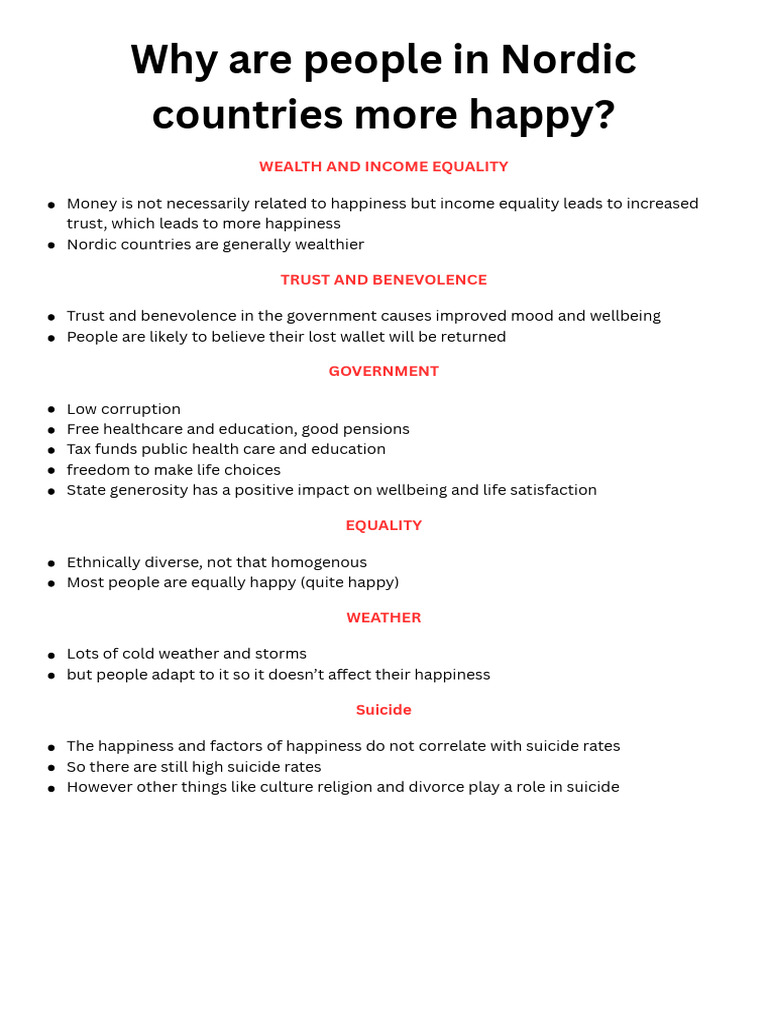
In the sprawling garden of global economic systems, Nordic capitalism blooms as a rare and radiant flower—its petals nourished by the harmonious intertwining of market dynamism and social welfare. Unlike the jagged thorns of cutthroat competition or the rigid austerity of doctrinaire models, this system unfurls with an intricate balance that seems to cradle happiness itself. The Nordic countries—Denmark, Sweden, Norway, Finland, and Iceland—offer more than just puzzles of high GDP or enviable living standards; they present an alchemy that transforms economic success into societal well-being, crafting a sustained atmosphere of contentment rarely matched on the world stage.
The Symbiosis of Market Efficiency and Social Equity
At the heart of Nordic capitalism lies a paradoxical embrace of both free-market prowess and an unyielding commitment to egalitarianism. This fusion refuses to relegate economic prosperity and social justice to opposing corners of the ring. Instead, it choreographs a delicate ballet where market forces drive innovation, entrepreneurship, and wealth creation, while robust welfare systems ensure the fruits of growth are equitably shared.
By investing heavily in public goods such as education, healthcare, and social security, Nordic nations smoothen the sharp edges otherwise carved by pure capitalism. These investments function like a finely tuned thermostat, regulating societal pressures and reducing the volatility that breeds anxiety and disillusionment. When citizens are confident their fundamental needs and rights are secured regardless of market whims, they engage with economic life more fully, fostering a pervasive sense of agency and trust.
Trust as the Invisible Currency
Trust is the crystallizing element that elevates Nordic capitalism above conventional economic models. It permeates every aspect of public and private life—from the reliability of social institutions to honesty in business transactions and everyday civic interactions. This intangible capital lubricates the gears of society, reducing transaction costs, and fostering cooperation on an expansive scale.
High institutional trust creates a social fabric where people believe in fairness and shared destiny. Such trust diminishes the need for onerous oversight and bureaucratic entanglements, enabling a more agile, transparent, and responsive economy. This societal faith in collective governance and mutual respect becomes a wellspring of happiness, as it cultivates security and diminishes fear of exploitation or abandonment.
Work-Life Integration: The Architecture of Balance
The Nordic approach to capitalism does not enshrine work as an idol to be worshiped but rather respects its role as one component of a holistic life. With policies that promote parental leave, flexible work hours, and generous vacation time, these nations architect an environment where individuals can flourish professionally and personally.
Such integration recalibrates the traditional work-life pendulum, allowing it to swing gently rather than wildly. Freedom to spend time with family, pursue hobbies, or simply rejuvenate translates into lower stress levels, greater mental health, and ultimately, a higher collective happiness quotient. This equilibrium is more than a policy achievement; it is a cultural ethos that values human flourishing above relentless productivity.
Education and Innovation as Catalysts for Fulfillment
Education in the Nordic model is not merely a means to an economic end but a lifelong journey that empowers citizens to navigate both thought and trade with confidence. Free and accessible education levels the playing field, enabling broad sections of society to develop skills that feed into a vibrant, innovative economy.
Innovation here is not a frantic scramble but a measured stride, bolstered by research investments and a tolerance for experimentation bolstered by social safety nets. This creates an ecosystem where individuals are emboldened to take creative risks without the looming specter of destitution, weaving intellectual curiosity and economic security into an inseparable tapestry of fulfillment.
The Role of Inclusive Governance and Participatory Democracy
Another cornerstone of Nordic capitalism’s elixir of happiness is the interplay between governance and citizen participation. Inclusive political structures that emphasize transparency, accountability, and broad civic engagement empower individuals to shape policies that affect their lives directly.
When people feel their voices matter and decisions reflect collective will, a profound sense of ownership and community pride emerges. This participatory democracy acts as a societal salve, reinforcing social bonds and mitigating alienation that often accompanies top-heavy or opaque governance systems. The confluence of political inclusiveness and economic system cohesion leads to a resilient, adaptive society poised for sustainable well-being.
Environmental Stewardship and Its Psychological Resonance
The Nordic capitals are by no means blind to the existential importance of the natural world, weaving environmental responsibility into their economic fabric. Sustainability is not simply an add-on but a core principle that guides resource use and development strategies.
This intimate relationship with nature goes beyond policy pragmatism; it touches a deeper psychological chord. The preservation of pristine landscapes and commitment to renewable energy imbue citizens with a sense of guardianship and hopefulness—a feeling that their well-being is intertwined with the health of the planet. This ecological mindfulness enriches happiness by anchoring it in something enduring and collective.
The Unique Cultural Ethos: Janteloven and Humble Ambition
Cultural undercurrents underpinning Nordic capitalism cannot be overlooked. The concept of Janteloven—a social code emphasizing modesty, equality, and community over individual aggrandizement—shapes societal attitudes toward success and wealth.
This ethos tempers excess and nurtures social cohesion, crafting a landscape where ambition is tempered by responsibility and personal triumph is celebrated in the context of collective advancement. It discourages divisive hierarchy and fosters an environment wherein happiness is less often pursued as a solitary conquest and more frequently experienced as a shared, communal state.
In sum, Nordic capitalism’s high ranking in happiness is no mere accident or byproduct of wealth alone. It is the carefully cultivated fruit of a system that interlaces economic vitality with social conscience, trust, balance, participation, and cultural humility. Like a masterful symphony, each element plays its part to create a resonant harmony—a testament to the possibility that capitalism can indeed be a conduit not just for prosperity, but for enduring human joy.

