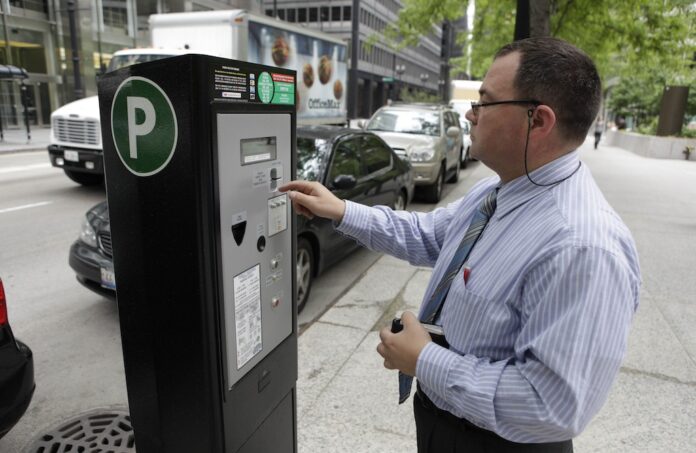
Have you ever paused beside a parking meter and wondered, “Is this just a convenience for drivers, or does it signify something deeper, perhaps a cog in the grand machinery of capitalism?” At first glance, parking meters seem innocuous—simple devices to regulate scarce urban space. But beneath their metallic exterior lies a fascinating embodiment of economic theory, social control, and market dynamics. Could these everyday objects actually symbolize the quintessential capitalist tools? Let’s delve into the intricate relationship between parking meters and capitalism, exploring how they serve as instruments of commodification, profit extraction, and urban control.
Parking Meters as Instruments of Commodification
Commodification, the process of transforming goods, services, or ideas into commodities to be bought and sold, is a cornerstone of capitalist economies. Parking meters exemplify this principle in an urban context. What was once a commons—a shared, free resource in public space—transmutes into a monetized good through the installation of parking meters. Suddenly, a stretch of curbside parking, previously open to all, becomes a scarce, priced commodity. Time itself is parceled out as a finite good, measured in minutes and purchased via coins or digital payment. This act of commodification reshapes perceptions of public space and modifies behavior accordingly.
No longer can drivers assume unfettered access to curbside parking. Instead, they enter a transactional relationship with the municipality or private entity controlling the meter. This dynamic reflects the broader capitalist tendency to enclose commons and privatize previously accessible resources, converting them into revenue-generating assets.
The Role of Scarcity and Demand in Capitalist Dynamics
Capitalism thrives on scarcity; it fuels demand, competition, and profitability. Parking meters impose artificial scarcity by limiting the time a vehicle may occupy a prime spot. By enforcing time limits and requiring payment, these devices engineer scarcity in an environment naturally abundant—urban streets. This scarcity intensifies competition among drivers and elevates the value of street parking.
Moreover, the pricing mechanisms embedded within parking meters respond to supply and demand dynamics. During peak hours or in high-demand areas, rates might surge to temper excess demand, encouraging turnover and maximizing revenue. This dynamic pricing model mirrors capitalist market strategies seen in sectors ranging from airline tickets to ride-sharing. The fluctuating rates exemplify how capitalist economies seek to optimize resource allocation through price signals, steering behavior toward efficient usage—or at least toward profitability.
Profit Extraction and the Privatization of Public Space
One might assume parking meters primarily serve municipal infrastructure funds or public transit initiatives. However, the reality often reveals a nuanced ecosystem where profit extraction plays a pivotal role. Increasingly, cities lease parking meter operations to private corporations, sometimes including international investors, who then reap substantial revenue streams. This delegation shifts the monetization of public space from public stewardship to private profit maximization.
Such arrangements raise complex ethical and logistical questions: Who truly benefits from these transactions? How does privatization affect urban residents, particularly those from lower-income communities who may depend on affordable parking? The leasing of parking meters exemplifies the capitalist model of outsourcing public functions to private actors, underscoring the commodification of civic infrastructure as a market opportunity rather than a public service.
Behavioral Control and the Subtle Exercise of Power
Parking meters extend beyond mere economic function; they embody social control mechanisms discreetly embedded within capitalist urban design. By regulating who can park, for how long, and at what cost, these devices subtly orchestrate behavior in public spaces. This regulation can encourage rapid turnover, discouraging lingering in commercial areas, or disincentivize parking in congested neighborhoods to facilitate traffic flow.
The imposition of monetary cost on parking nurtures a particular behavioral calculus—drivers constantly calculate the worth of their time, the cost of parking, and alternative transit options. This interplay propagates a capitalist ethos where individuals act primarily out of economic self-interest, reframing mobility as a series of transactions rather than a shared communal experience.
Technological Evolution and Capitalist Efficiency
Parking meters have evolved dramatically, migrating from mechanical coin boxes to sophisticated digital systems capable of dynamic pricing, real-time data analytics, and remote management. This technological advancement amplifies capitalist imperatives by enhancing efficiency, optimizing revenue, and deepening market penetration.
Smart meters gather valuable data on parking patterns, consumer behavior, and urban traffic. This data fuels advanced analytics, allowing municipalities—or private operators—to refine pricing structures, predict demand surges, and implement enforcement strategies with precision. Consequently, parking meters transcend their prior passive role, emerging as active agents in capitalist urban governance, deploying technology to choreograph market outcomes.
The Symbolism of Parking Meters in Capitalist Urban Landscapes
Beyond tangible functions, parking meters symbolize the pervasive reach of capitalist logic into everyday life. They are a microcosm of urban economies where everything—even the fleeting act of stopping a car—can be monetized, regulated, and optimized for profit. Their omnipresence reminds city dwellers that public spaces, once considered common heritage, have been transformed into contestable assets within capitalistic frameworks.
This symbolism provokes a playful yet profound question: if a place to simply pause and rest your vehicle demands payment, what other facets of daily life are quietly being commodified under the guise of infrastructure and convenience? Perhaps parking meters are less about managing cars and more about managing our participation in capitalist urban order.
Conclusion: A Small Device, a Grand Narrative
In summary, parking meters are not mere practical tools; they are intricate capitalist instruments woven into the fabric of urban life. Through commodification, artificial scarcity, profit extraction, behavioral regulation, and technological augmentation, they embody core capitalist principles. These devices serve as constant, reminder-laden sentinels enforcing the commodification of public space and the monetization of time and convenience.
Understanding parking meters as capitalist tools invites us to reconsider how everyday objects shape and reflect broader social and economic forces. So next time you feed a meter, ask yourself: are you simply paying for parking, or are you partaking in a subtle transaction with the capitalistic architecture governing modern cities?

