In the ever-evolving landscape of modern capitalism, the traditional career model—centered on a singular professional trajectory—is increasingly becoming an anachronism. Instead, a paradigm shift is underway, captivating a growing number of individuals and institutions alike: the portfolio career. This approach, characterized by a mosaic of diverse roles, projects, and freelancing engagements rather than one linear job, promises not only adaptability but also a radical reimagining of what work means in the 21st century. As economic structures grow more complex and technology rapidly disrupts industries, portfolio careers emerge as a fitting response, aligning individual aspirations with the mutable rhythms of contemporary capitalism.
Reconceptualizing the Nature of Work
The portfolio career heralds a fundamental alteration in our understanding of employment. No longer confined to the notion of lifetime tenure or upward ladders within a single organization, it embraces fluidity and multiplicity. This shift responds to the diminishing certainty of traditional employment, where layoffs and automation have rendered job security an elusive ideal. The portfolio career positions workers as versatile agents who curate a collection of roles, enabling continuous learning and growth. This novel lens transforms work from a fixed identity into a dynamic assemblage of experiences, fostering resilience and personal development in the face of economic volatility.
Capitalizing on the Gig Economy’s Momentum
The proliferation of the gig economy has laid the groundwork for portfolio careers to flourish. Platforms offering freelance work, contract assignments, and remote consultations have dismantled geographical and institutional barriers. This democratization of work opportunities resonates with the portfolio approach, where individuals harness various income streams to build a diversified professional ecosystem. In doing so, workers circumvent traditional gatekeepers, cultivate new skills, and partake in a more egalitarian labor market. Portfolios, therefore, are not just collections of jobs but strategic responses to an economy predicated on flexibility and decentralized engagement.
Navigating Economic Uncertainty with Agility
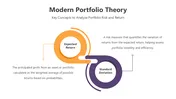
Modern capitalism’s hallmark is its unpredictability. Market fluctuations, shifting consumer preferences, and technological disruptions demand agility from the workforce. Portfolio careers inherently accommodate this need by fostering adaptability. When one income source dwindles, others can compensate—a built-in buffer against economic shocks. This diversification parallels principles found in financial portfolio theory, where spreading investments mitigates risk. In the realm of employment, cultivating multiple professional “investments” insulates individuals from singular points of failure, granting them greater autonomy and stability in tumultuous times.
Empowering Personal Fulfillment and Creativity
Beyond economic pragmatism, portfolio careers invite a renaissance of personal fulfillment and creative exploration. The monotony of a single-role existence often stifles intrinsic motivation and innovation. In contrast, juggling diverse roles exposes individuals to varied challenges and perspectives, stimulating intellectual curiosity and passion. This mosaic of professional identities allows talents and interests, sometimes seemingly disparate, to coexist and synergize. As a result, workers can sculpt careers resonant with their multifaceted identities and aspirations, blurring boundaries between vocation, avocation, and lifelong learning.
Championing Entrepreneurial Mindsets
Portfolio careers dovetail seamlessly with burgeoning entrepreneurial cultures. Individuals adopting this model often operate as solopreneurs or small-scale enterprises, marketing their unique skill sets across contexts. This entrepreneurial stance fosters proactive career management, emphasizing self-branding, networking, and financial acumen. The portfolio professional becomes an architect of their own economic destiny, embracing risk not as a threat but as an avenue for opportunity. This shift nurtures innovation and dynamism, traits invaluable in capitalist systems driven by competition and creative destruction.
Redefining Organizational Relationships
In embracing portfolio careers, the employer-employee paradigm undergoes transformation. Organizations, too, adapt, increasingly engaging with talent on a project or consultancy basis rather than traditional permanent hires. This frictionless interchange challenges legacy notions of loyalty and hierarchy, privileging results and expertise over tenure. Consequently, workplaces evolve into ecosystems where individuals contribute in specialized, transient capacities, and collaboration becomes more transactional yet mutually beneficial. The portfolio career molds not just workers but the very architecture of capitalist enterprises toward decentralization and fluid collaboration.
Harnessing Technology to Expand Opportunities
Technology underpins the ascendancy of portfolio careers, bridging skills and marketplaces globally. Digital tools empower professionals to manage diverse projects, communicate seamlessly, and build personal brands online. Artificial intelligence, automation, and digital platforms continually open novel domains for engagement, often inaccessible in traditional employment. This technological scaffolding enables portfolio holders to transcend geographic, cultural, and sectoral boundaries, weaving networks and revenues across a complex, interconnected global economy. As capitalism becomes more digitized, the portfolio career becomes the quintessential model for leveraging these advances.
Fostering Lifelong Adaptability in a Knowledge Economy
The shift towards knowledge-intensive industries places a premium on continuous learning and cognitive flexibility. Portfolio careers inherently encourage the accumulation of varied expertise and the honing of transferable skills. Constantly engaging with new roles or projects necessitates intellectual agility and openness, equipping individuals to thrive amidst rapid innovation and evolving market demands. In this sense, such career models align perfectly with the knowledge economy’s imperatives, nurturing professionals who are not just specialists but versatile knowledge synthesizers and creators.
Challenging Societal Norms and Catalyzing Cultural Shifts
Finally, portfolio careers precipitate broader societal and cultural transformations. They challenge entrenched values around career stability, success, and identity, inviting societies to reconsider what it means to “work” and to “succeed.” This redefinition nurtures inclusivity, offering those marginalized by rigid employment structures alternative pathways to participate and prosper. Moreover, the multifaceted career identity fosters richer, more diverse narratives of professional life, encouraging a culture that values adaptability, creativity, and autonomy. This cultural shift not only mirrors but actively shapes the evolution of modern capitalism itself.


