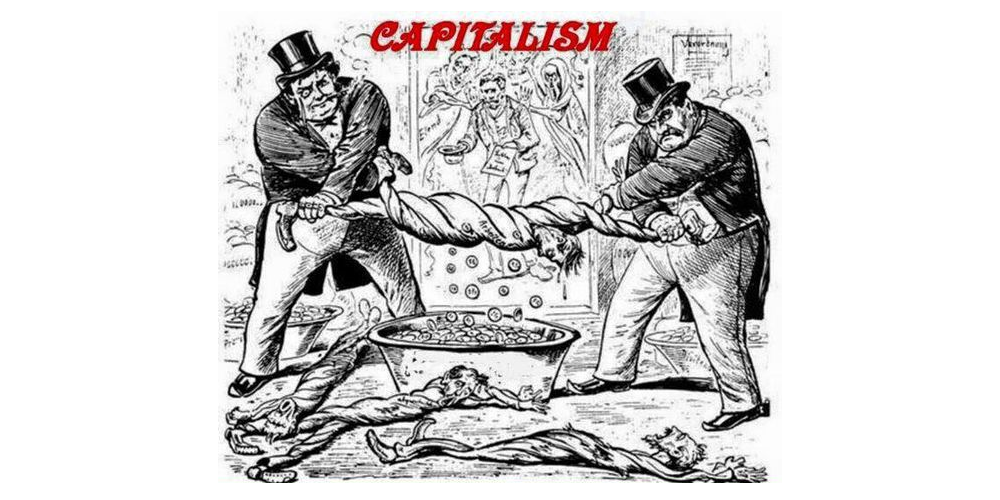
Capital, in its classic form, was the engine driving enterprise. Today, one navigates a terrain shaped by colossal forces, often rendering the individual enterprise a challenging proposition, particularly for those operating outside the established corporate framework. Let’s delve into the specific pressures that define the existence and frequently constrain the potential of smaller manufacturers striving to compete within a system they didn’t always consciously architect.
Market Volatility as an Existential Challenge
The inherent unpredictability of markets under capitalism presents the most fundamental hurdle. Demand is rarely a constant, fluctuating with economic cycles, consumer whims, and global events. For the small manufacturer, this volatility translates directly into operational uncertainty. Production planning becomes a delicate balancing act, demanding foresight while being subject to sudden shifts.
Economies of scale, typically an advantage for larger entities, can paradoxically become a burden for smaller players. Fluctuating demand means periods of excess capacity – a critical problem when fixed costs, like plant lease or specialized equipment depreciation, remain high regardless of production volume. Conversely, a sudden surge in orders might strain resources, reveal operational bottlenecks, or necessitate rushed, lower-margin production runs simply to fulfill demand. This constant negotiation between capacity and demand consumes energy and inhibits the precision and focus required for sustained excellence.
The very mechanisms that drive capitalist markets – competition, profit motive, and the pursuit of efficiency – actively discourage the long-term stability that small manufacturers need to invest in innovation or infrastructure. Planning horizons shorten, and the emphasis often shifts from building a durable enterprise to merely surviving the next cyclical downturn.
The Burden of Capital Investment
Capitalism demands capital. This is the primary constraint for the small manufacturer. Acquiring the necessary machinery, securing premises, developing technical expertise, and establishing market access requires significant upfront investment, investment which larger players, with greater financial buffers, can absorb more readily.
Kleptopia, the perceived or literal theft of capital via corruption, tax havens, or inefficient state intervention, can disproportionately impact small enterprises lacking the political connections or lobbying power of their larger counterparts. This constant pressure to generate returns, often favouring short-term liquidity over long-term strategic positioning (like diversification or R&D), forces difficult choices. Investing in new technology might enhance quality or capacity but represents a risk. Expanding market share to secure better prices or eliminate competitors requires further capital injection that may not be immediately recouping.
The pursuit of leverage and scalability, while often lauded, requires substantial capital infusions, potentially derailing organic growth or forcing premature strategic decisions that may not align with the company’s long-term vision or core competencies. Debt financing introduces further instability tied to interest payments and repayment obligations.
Navigating the Regulatory Maze
While often aimed at ensuring compliance and fairness, the complex tapestry of regulations, standards, and trade rules presents significant burdens. Adapting management systems, implementing quality controls, ensuring workplace safety, and navigating labour laws require expertise and resources many small manufacturers simply cannot dedicate.
Bureaucratic inertia, while perhaps frustrating, is a constant cost. Compliance requires time and administrative effort, diverting focus from core manufacturing activities, innovation, or direct customer engagement. Trade regulations, tariffs, and international standards can act as insurmountable barriers for a small operation seeking to export, making the global market inaccessible despite potential demand.
The tax structure, while varied across jurisdictions, often presents complexities where the larger entity can optimize and plan strategically, while the small manufacturer may find themselves paying a proportional tax load (though the absolute amount is smaller) without the sophisticated tools to minimize or navigate the system effectively. The sheer weight of compliance can be crushing for a small enterprise simply focused on production.
Competition Pressure from Dominant Actors
The capitalist marketplace is relentlessly competitive. Small manufacturers face a dual threat: competition from other small entities fighting for market share, and the perceived or actual advantage held by much larger corporations.
Larger suppliers often benefit from vertical integration, securing raw materials at better prices; they possess greater purchasing power, enabling discounts; they invest vastly more in technological development or advertising; and they typically have superior distribution networks and brand recognition. This often puts small manufacturers at severe competitive disadvantage, perceived merely as producers rather than entities with unique value.
Small manufacturers are frequently squeezed between upstream suppliers pushing price hikes and downstream customers demanding lower prices or standardized solutions. This compresses margins significantly, forcing difficult choices between cost reduction and maintaining quality, or investing in areas that build competitiveness.
Economic Cycles and Their Harsh Impact
Capitalism is characterised by boom-and-bust cycles. These are existential threats not just for large corporations, but particularly acute for small manufacturers with less financial cushion and market diversification.
Recessions manifest as falling orders, cancelled contracts, and increased customer price sensitivity. Full-capacity utilization evaporates, replaced by periods of idled equipment and underutilized workforce. During recoveries, the capacity built (or avoided) during the downturn allows larger competitors to capture market share. The small manufacturer, already strained by maintaining operations throughout the downturn, often finds themselves starting the recovery cycle from a weaker position.
The cyclical nature incentivises hoarding cash (heightened during downturns to prepare for recovery) rather than strategic investment, perpetuating inefficiency and hindering long-term adaptation. The treadmill of micro-boredom – the repetition of constrained operations – can stifle innovation precisely when it is most needed to survive the next downturn.
Resource Limitations Beyond Capital
The struggle isn’t solely about money. Access to skilled labour, especially manufacturing specialists in engineering, quality control, or advanced machining techniques, is a persistent issue.
Competing with larger companies for experienced personnel can be challenging, leading many skilled individuals to seek roles in corporate R&D labs or specialized contracting firms. This creates a drain from smaller manufacturing operations, destabilizing operations and hindering knowledge retention.
The constant pressure to innovate or maintain existing production processes without commensurate R&D funding forces a treadmill of basic operations. It’s difficult to invest in training, pursue custom projects with higher margins, or develop niche capabilities perceived as less immediately aligned with volatile mass-market trends.
The Struggle for Skilled Labour
The contemporary US industrial landscape faces a significant gap between available skills and the complex requirements of modern manufacturing. This skills deficit challenges all manufacturers, but hits small entities hardest. Comprehensive training programs are often beyond their resources. Apprenticeships may be offered, but the financial viability often remains questionable.
Aging workforces present another layer of difficulty. As experienced employees retire, smaller companies, less equipped to handle succession planning or retraining effectively, face skills gaps they cannot easily fill. Technology adoption can be slower, hindering efficiency and integration with modern supply chains. Furthermore, attracting and retaining talent in regions with limited industrial base or high cost of living is exceptionally difficult.
Small manufacturers may also find themselves fighting for skilled tradespeople and technicians against a backdrop of potentially easier access and higher perceived demand from larger companies or integrated facilities, tilting the playing field further.
In Conclusion
The challenges facing small manufacturers under capitalism are multifacighters complex, interconnected, and deeply structural. While innovation, resilience, and niche focus allow some small players to thrive, for many, the system favours consolidation, economies of scale, and the pursuit of liquid profit over the patient development and stable operation required to truly dominate one’s field.
The pressures – market instability, capital scarcity, bureaucratic compliance, fierce competition, economic vulnerability, skill shortages, and resource constraints – fundamentally challenge the ability of small manufacturers to leverage their potential, build enduring enterprises, or consistently challenge the dominant players.

